Writlyz

Home › Guides and tips › Step-by-step guide

Step-by-step guide

How to organize a novel, step by step

Organizing a novel does not mean smothering inspiration in spreadsheets. It means that when you sit down to write, all your energy goes into the scene and none into hunting for the name of the protagonist's brother. The authors who finish their books are not the ones with the best ideas. They are the ones who know where they put them.

Start free

Free plan forever · No card · Ready in a minute

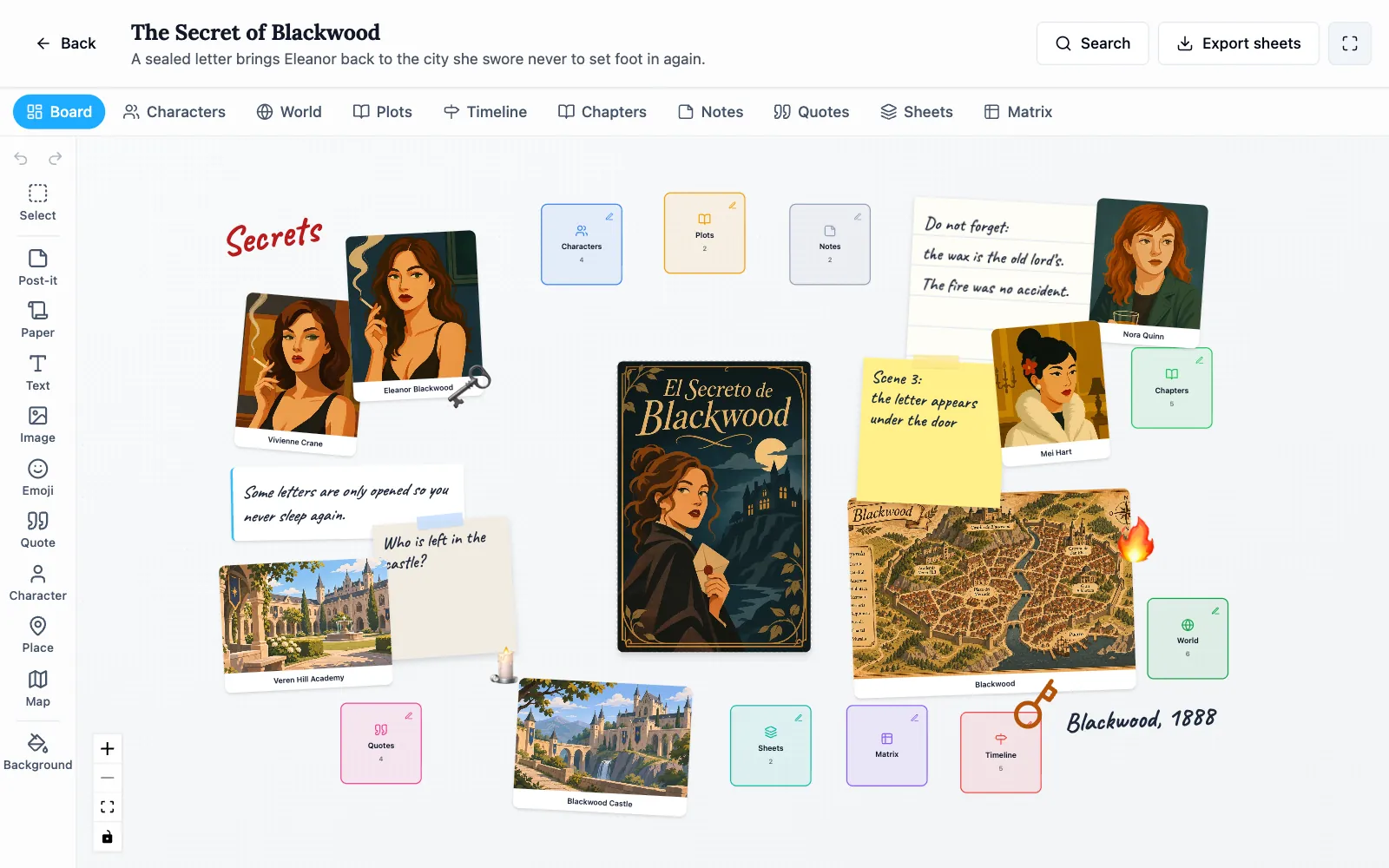
Visual board of a novel in Writlyz with characters, world, plots and chapters

This guide covers the whole process in six steps. Follow them in order if you are starting out, or jump to the one you need if your novel is already under way.

1. Sum up your story in one sentence

Before you open any tool, write what your novel is about in a line or two: who the protagonist is, what they want and what stands in the way. If you cannot sum it up, you do not have it clear yet, and that will show by chapter ten.

That sentence is your compass. In Writlyz you can keep it in the project itself, under the title, so it is in front of you every time you open the board and wonder whether a scene belongs in the book.

2. Bring everything into one place

The worst enemy of a novel is scatter. Notes on your phone, a notebook, three documents and a pile of screenshots. Spend an afternoon gathering it all, even if it is a mess. What is not gathered ends up forgotten or duplicated.

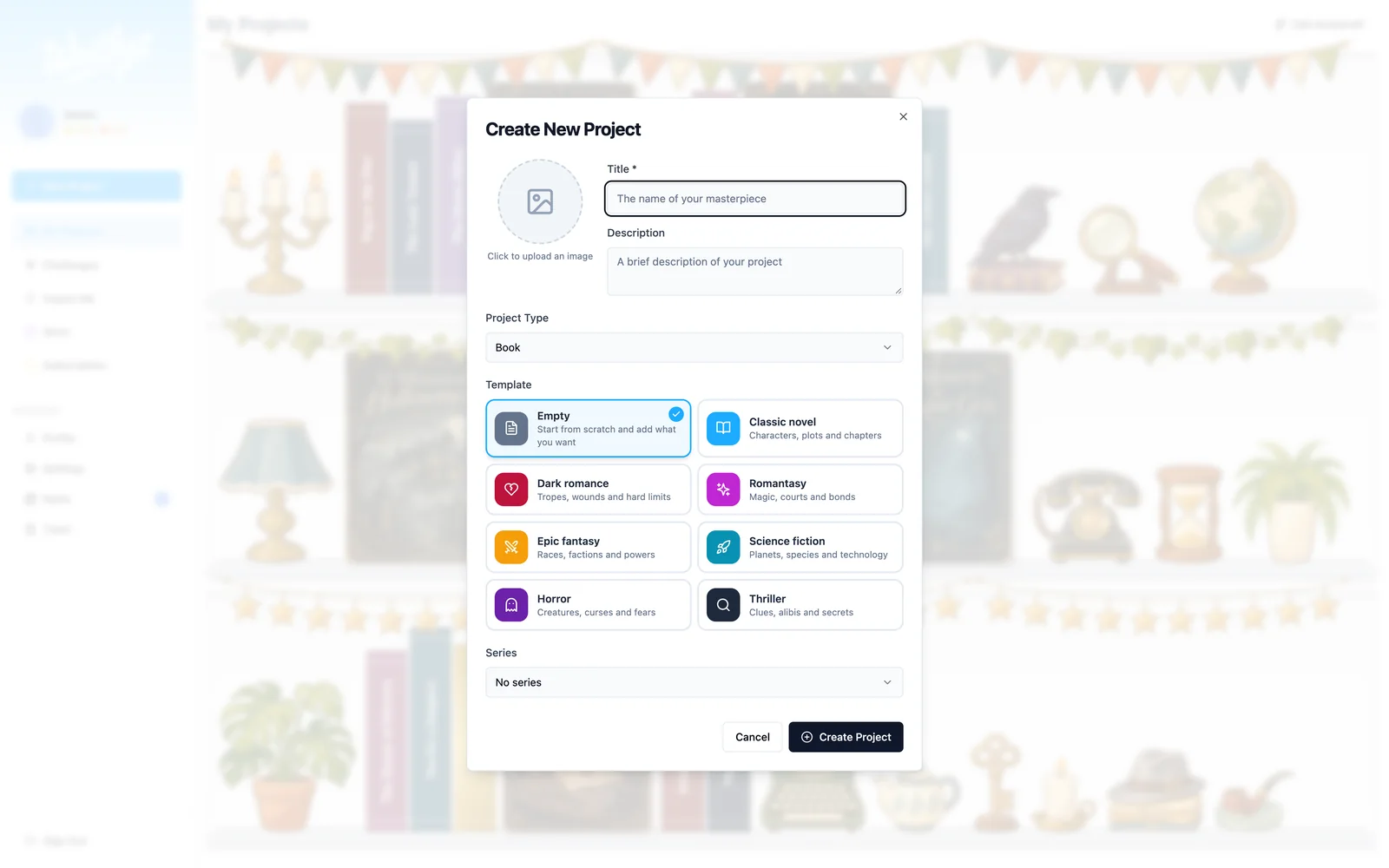
When you create a project in Writlyz you start with a clean board and add only the sections you need. Pour in what you have without polishing it yet. Having a single place is already half the order.

Creating a new project in Writlyz

Try it with your own novel

Create your project in under a minute and start sorting out characters, plots and chapters. Free, with no card.

Start free

3. Define your characters before you put them in trouble

You do not need a twenty-page biography. It is enough to know what each character wants, what they fear and what wound they carry. With those three facts you can predict how they will react in any scene, and the reader will feel it as consistency.

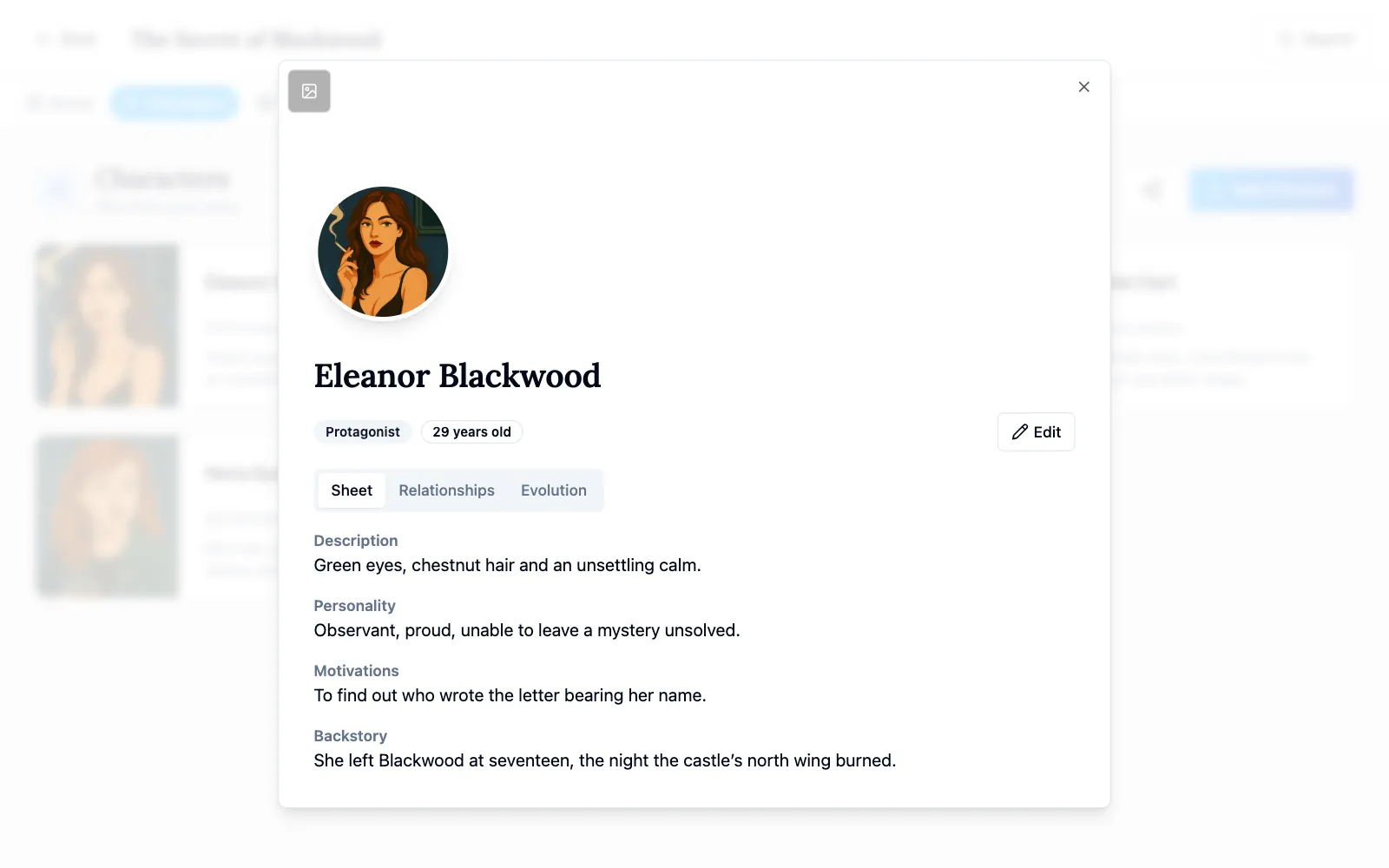
Create a profile for each one, with a picture, traits and motivations, and add the fields your story needs. As the cast grows, the relationship map shows at a glance who is tied to whom.

Character profile in Writlyz with traits, motivations and backstory

4. Separate your plots and follow them one by one

A novel usually has a main plot and several subplots. The common mistake is thinking of them as one lump. Write them out separately, each with its setup, complication and payoff, and check that every one closes.

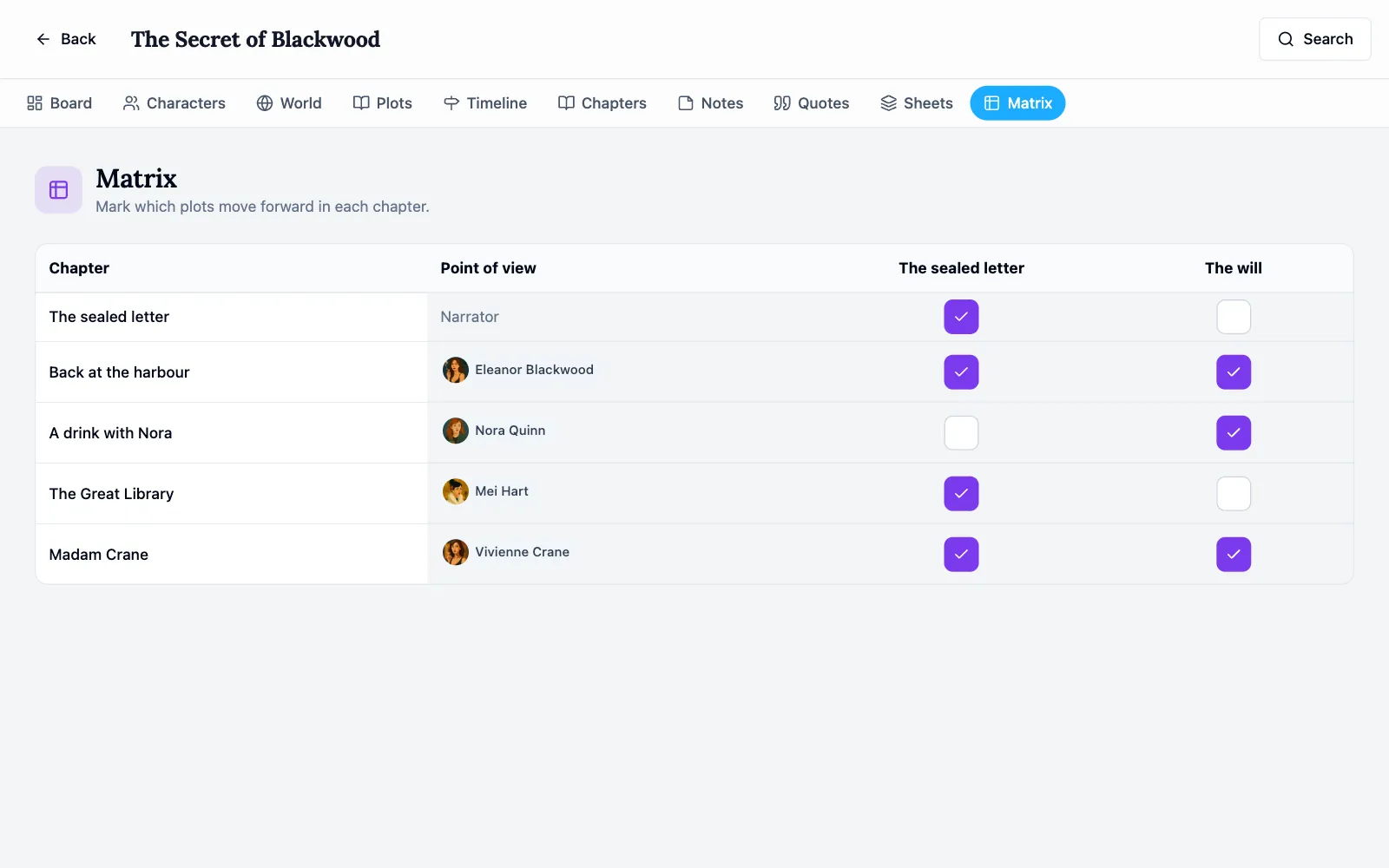
Then cross them with your chapters. The Writlyz story matrix does exactly that: it shows which plot moves in each chapter, and you see straight away if one has been dropped for too many pages.

Story matrix in Writlyz: plots crossed with chapters

5. Build the structure, even if you change it later

Divide the book into acts and chapters, with one line per chapter saying what changes in it. If nothing changes in a chapter, it is either surplus or missing something. Do not marry that outline: it is a provisional map, not a contract.

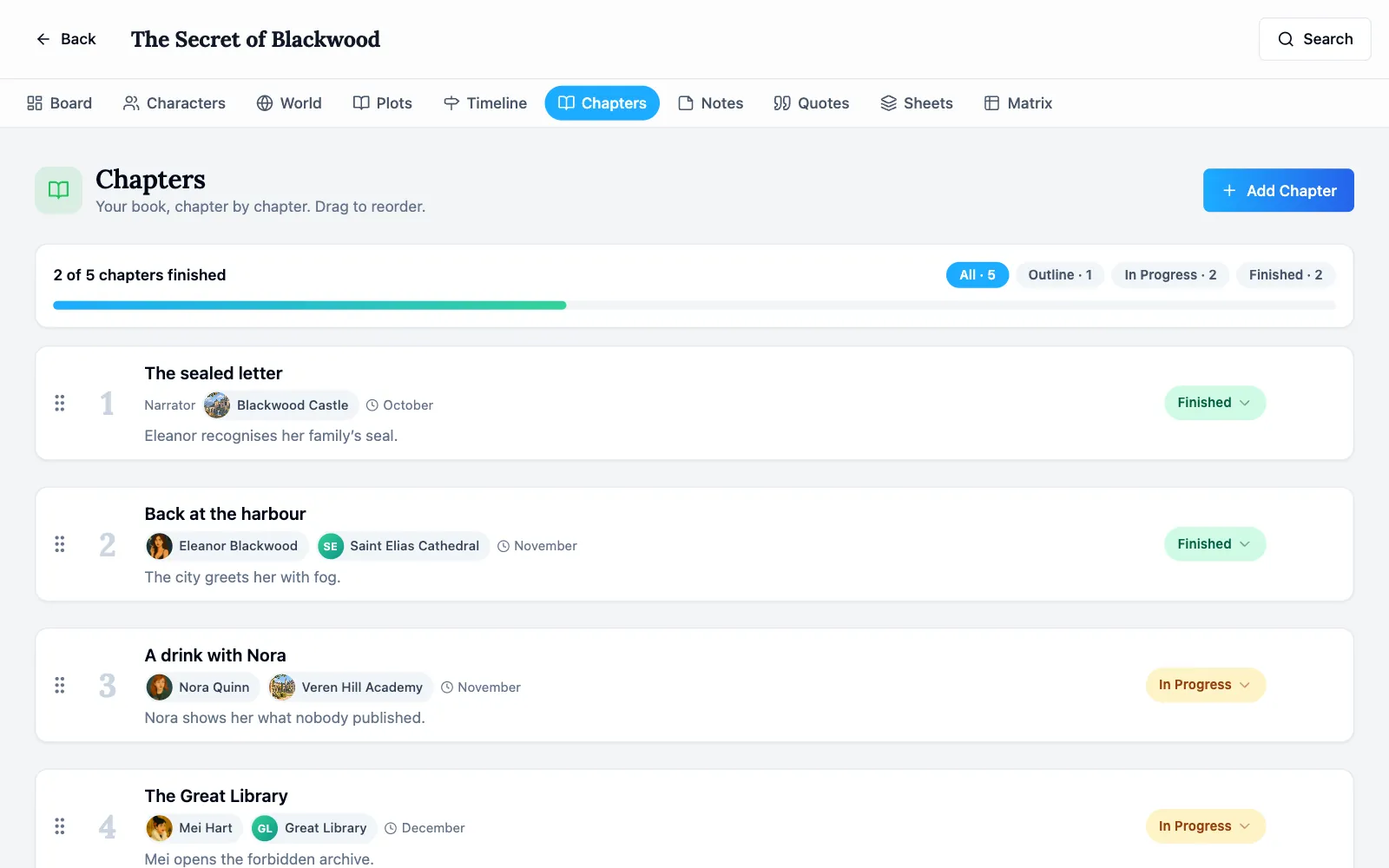
Because the structure reorders by dragging, you can try moving a twist or splitting a chapter without redoing anything. Fixing a structure is far cheaper than rewriting a hundred pages.

Chapter structure of a novel in Writlyz

6. Put a date on everything

Note when each important event happens, even if the reader never sees those dates. Chronology is where the mistakes hide that attentive readers find: impossible journeys, ages that do not add up, seasons that last a year.

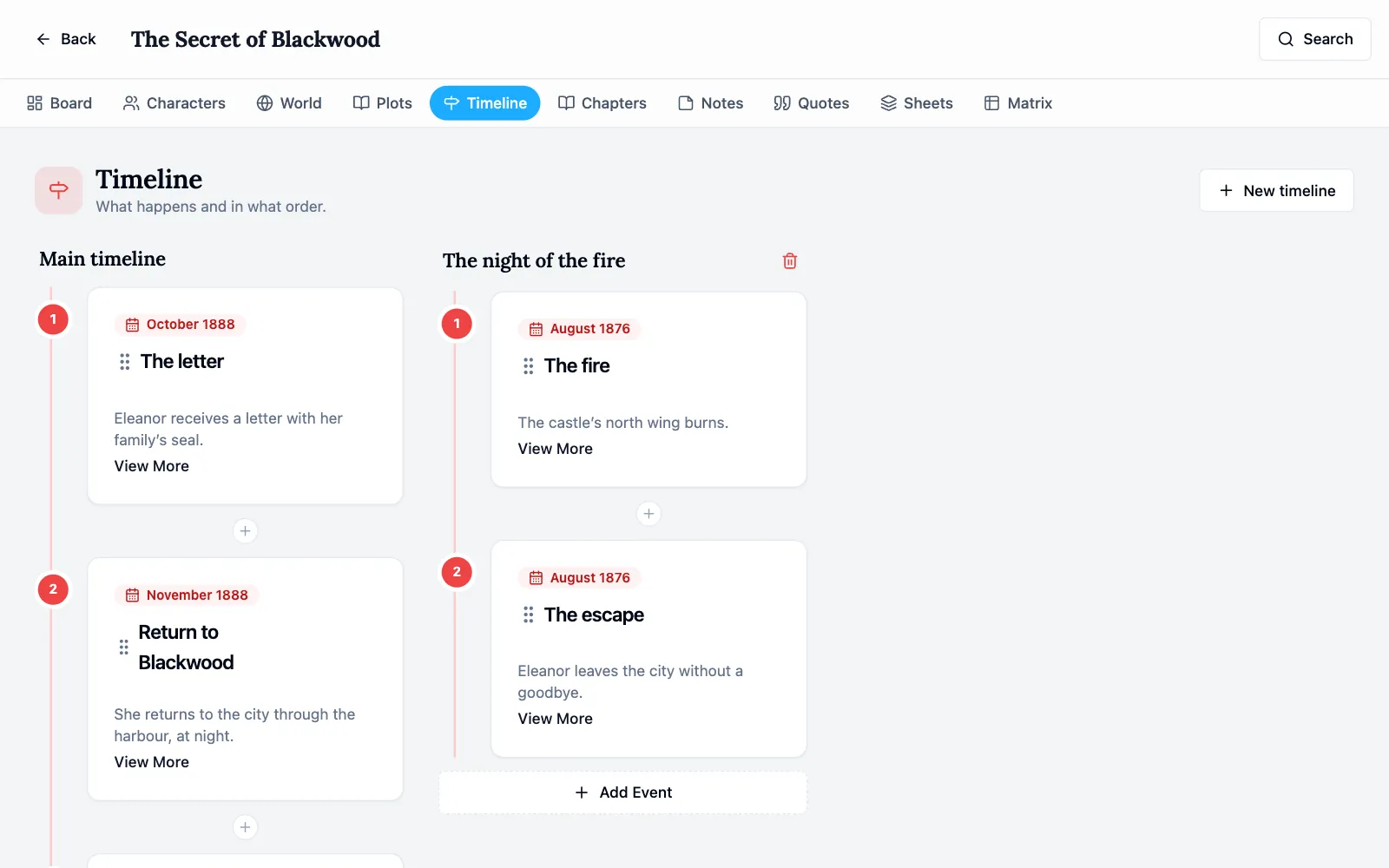
The timeline lays those events out and supports several timelines at once, in case your novel alternates eras or points of view. By the end of this step you will have the whole novel in view, and writing will feel more like filling in than guessing.

Try Writlyz free

Timeline of a novel in Writlyz

Character evolution, the story matrix, genre templates, series, the map creator and editing relationships are part of the Pro plan, which you can try for seven days with no card. Everything else is on the Free plan, within its limits.

Frequently asked questions

Do I have to organize everything before I write?

No. You can organize the minimum, the premise and the main characters, and fill in the rest as you write. What matters is noting every decision in the same place.

How long does it take to organize a novel?

A useful first version comes together in a couple of afternoons. After that it takes a few minutes at the end of each writing session.

What tool do I need?

Any tool that keeps characters, plots, structure and chronology in one place. Writlyz is built for exactly that and has a free plan forever.

Your whole novel on one board

Stop digging through loose notes. Start today on the Free plan, which lasts forever, and move to Pro only if you need it.

Try Writlyz free

More tips for your novel

Everything you can do with Writlyz

Organize your novel for free